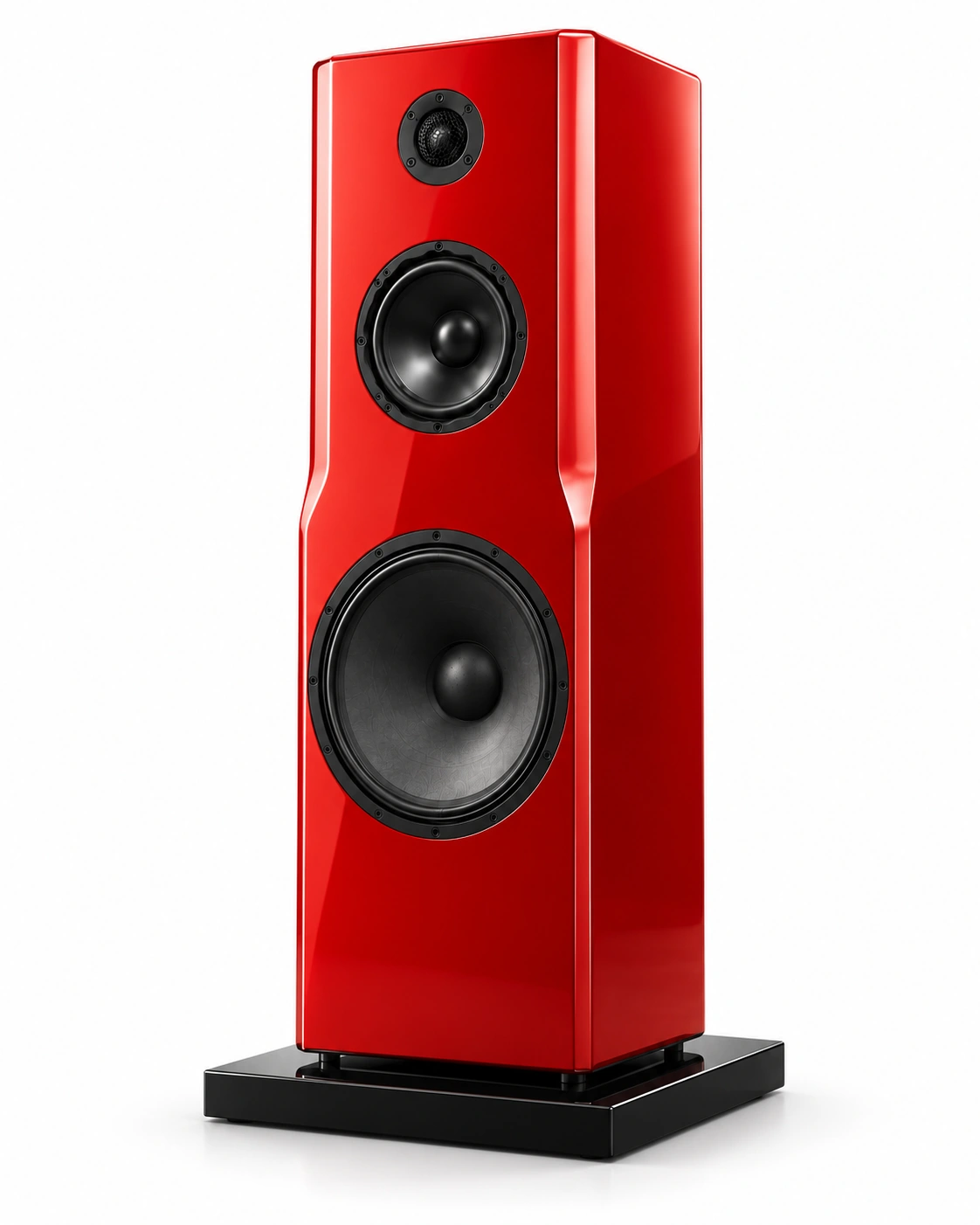
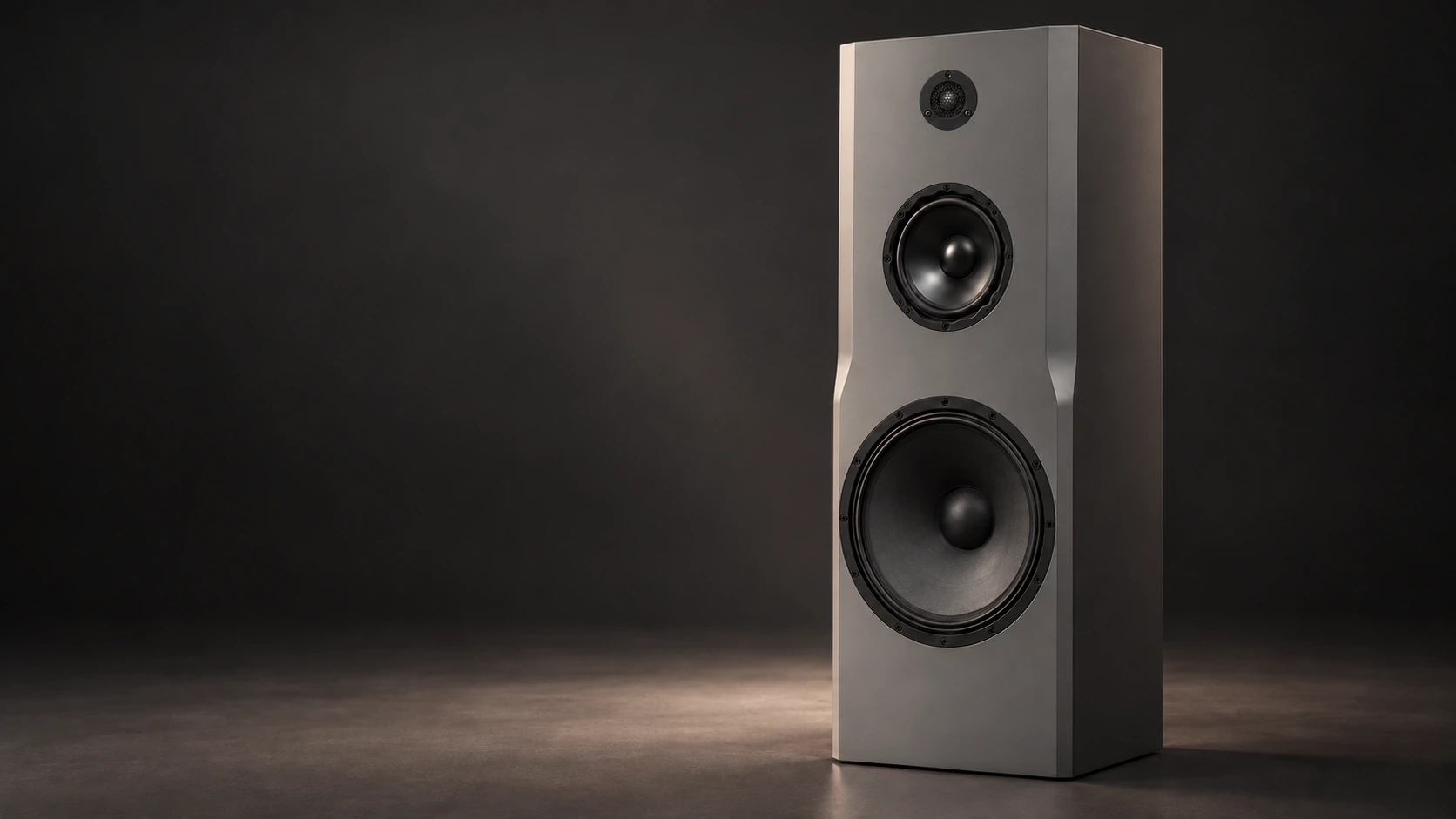
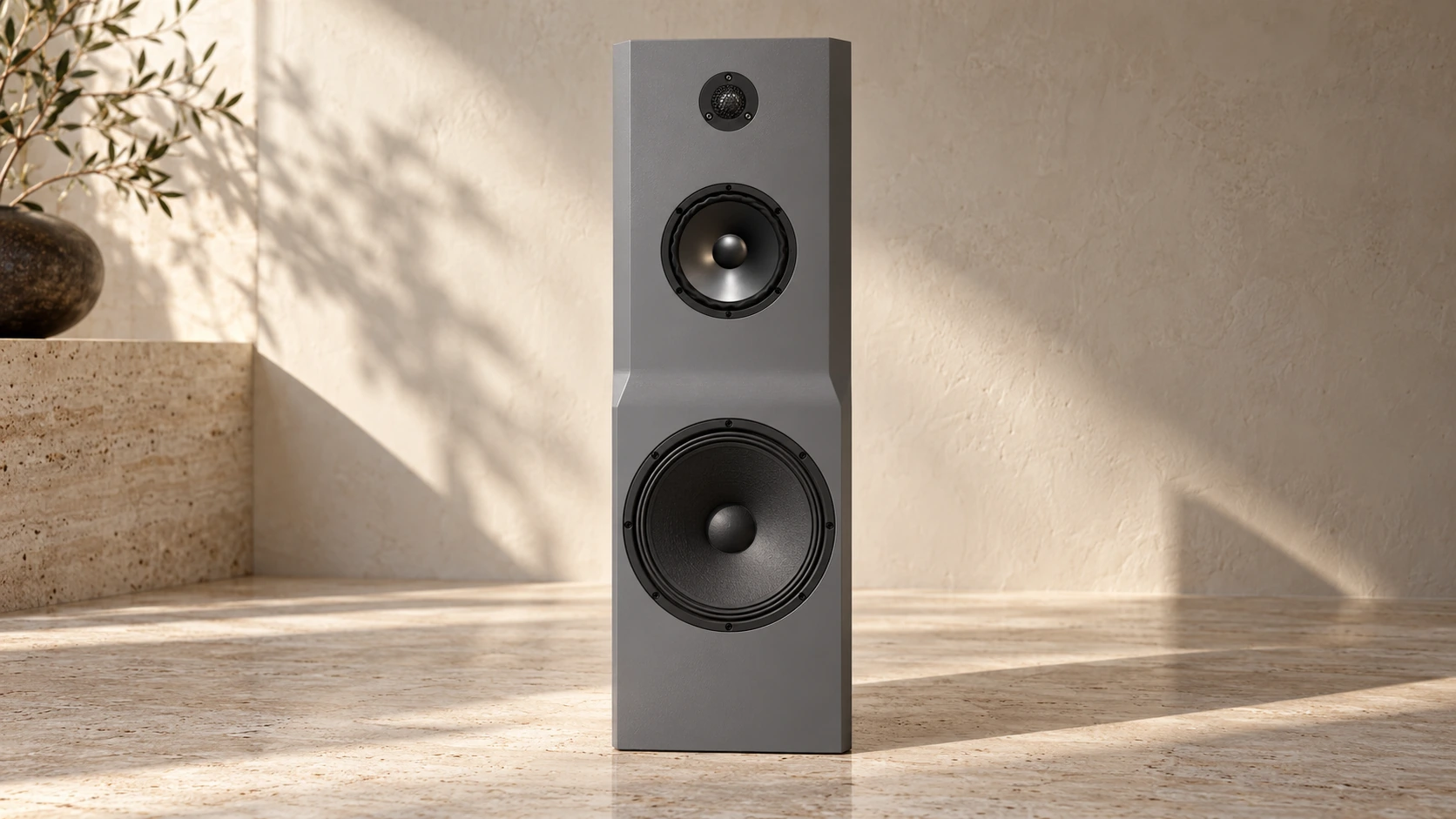
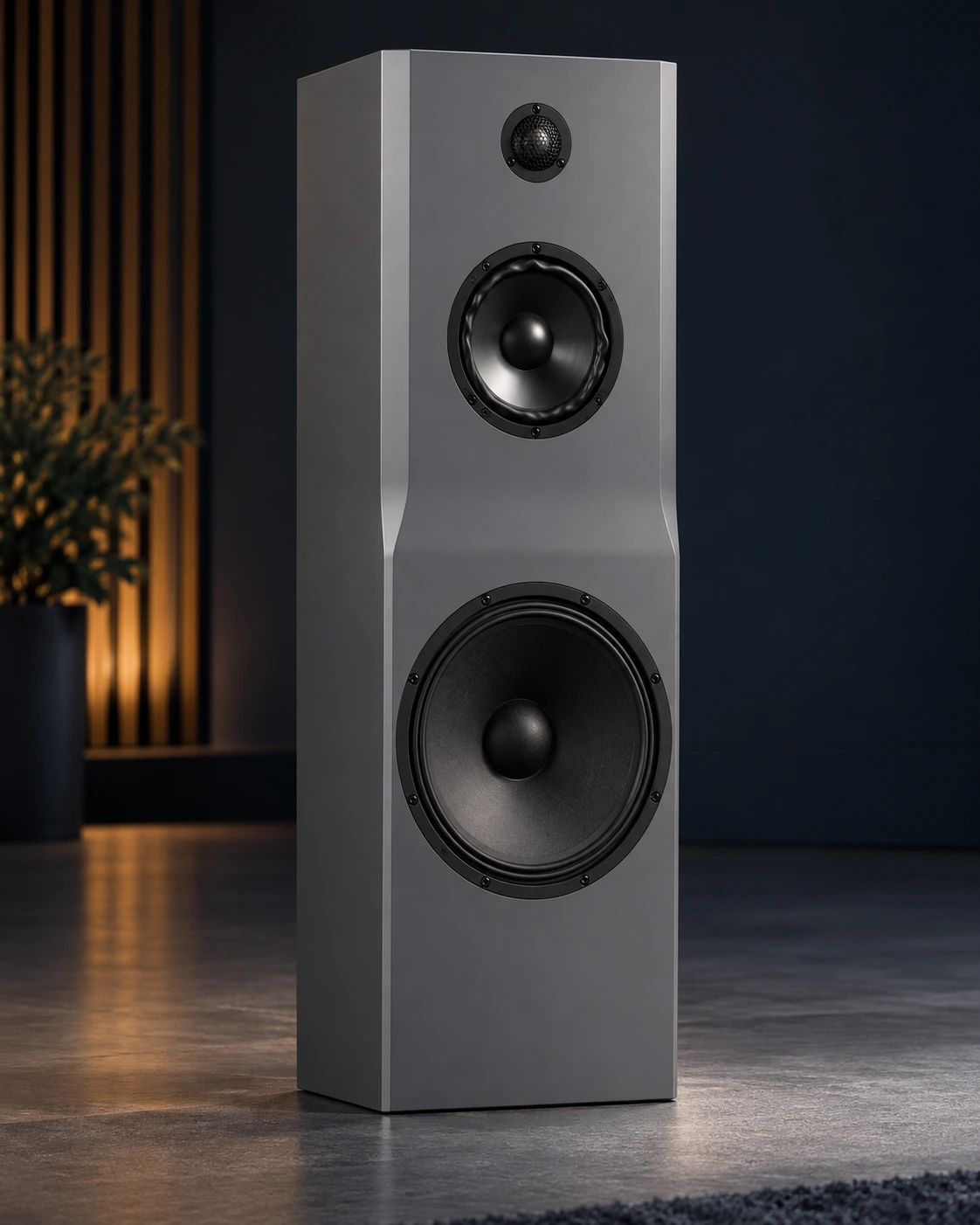
A sealed three-way tower with a shaped baffle, continuous vertical bevels and a floating plinth. JP1 brings the MP1 driver direction into a more restrained architectural form.
The interactive studio opens separately so you can explore the model in full screen.
Design 8 cabinet visualisation. Driver models and finishes are illustrative; this is not a manufacturing drawing or an acoustic simulation.
01 / In the workshop
Machining study.
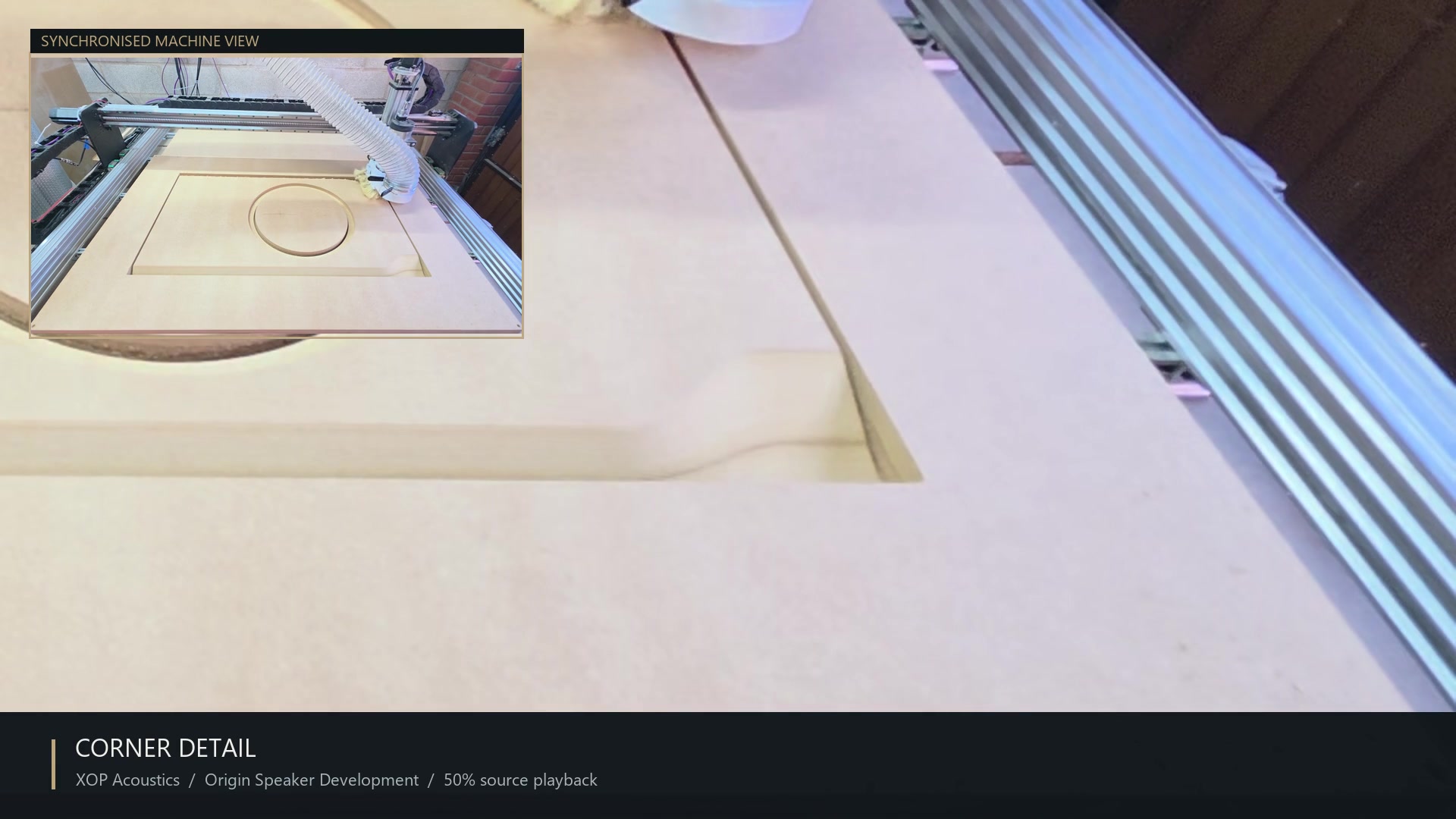
Real machining footage from the original 1080p recordings, stabilised for viewing, with a synchronised corner-detail replay. Filmed under JP1’s former development name, Origin. The opening workshop scene is an AI visualisation. Music accompanies the film; it is not a recording of the speaker.
Music: Gymnopédie No. 1 by Erik Satie, performed by Kevin MacLeod · CC BY 3.0. Excerpt, level and fades edited for this film.
02 / The selected design
Quiet geometry. A deliberate form.
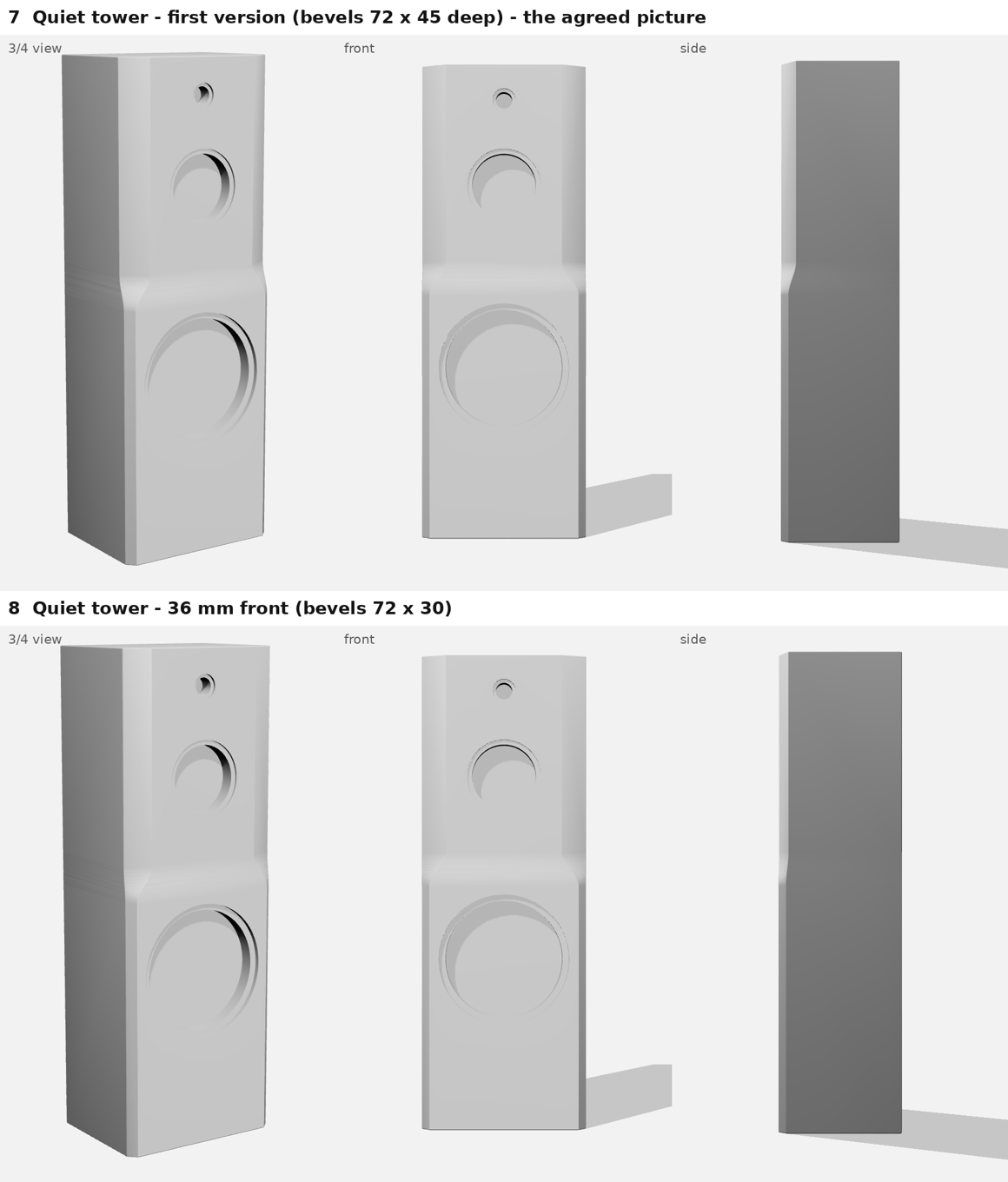
JP1 follows the rectangular Quiet Tower direction: a three-way layout, bevelled vertical edges and a shaped transition between the upper drivers and bass section.
Design 8 is the selected version. The reference records a 36 mm front and bevels labelled 72 × 30. It guides the appearance; the final construction dimensions belong to the engineering drawings.
Design reference
Quiet Tower · version 8
Front thickness
36 mm
Bevel reference
72 × 30, as labelled
Driver direction
Shared with MP1
Final finish
To be documented
The lower row is the selected design: 08. Supplied design reference, shown with its original comparison. Not a cutting template or a photograph of a completed cabinet.
03 / The development record
The development record.
Dated entries connect the design decisions to the work on the bench. New chapters will be added as the build progresses.
The first machining record.
Three original camera recordings document the panel machining. The film brings the sequence together and revisits the right-hand corner at half the source playback speed, with an overview inset to keep the detail in context.
The close view records the edge as the extraction shoe passes. Dimensional verification is a separate operation.
Quiet Tower 08 selected.
The 36 mm front-panel version is the chosen visual direction for JP1. The project will use the MP1 driver family, with the final installed components and tuning recorded as the build develops.
04 / Still to come
Development sequence.
NEXT CHAPTER
Fit & glue.
Dry assembly, joint alignment, glue-up and clamping. Photographs of the inside before it is closed.
PLANNED
Surface & finish.
Preparation, edge details and the chosen finish, documented through to the completed cabinet.
PLANNED
Install & tune.
Drivers, wiring, damping and the active system. Record each meaningful tuning revision.
PLANNED
Measure & listen.
Measured results with their test conditions, followed by clearly identified listening observations.
05 / Evidence, as it arrives
Validation & technical records.
JP1 is in development. Final response, output, distortion and crossover figures are not published here yet. Measurements will be tied to the actual cabinet and settings used.
Build recordMaterials, component identities, cabinet revision and the changes made along the way.
Test recordMicrophone position, measurement conditions, calibration and system settings alongside the results.
Which drivers will JP1 use?
The selected direction shares the MP1 driver set: BlieSMa tweeter, Purifi midrange and FaitalPRO bass driver. Exact installed model references will be confirmed in the build record before the final specification is published.
Are all the images photographs?
The hero renders and finish studies are AI-assisted design visualisations based on cabinet and driver references. They are not photographs or exact engineering models. The machining footage and its extracted stills record the real build. The film's illuminated XOP Acoustics workshop opening is an AI visualisation. The cabinet comparison is a design reference. Neither is presented as a photograph of the finished speaker.
Can I follow the next stage?
This page is the home of the JP1 development journal. Return for the next recorded stage, or contact XOP Acoustics about the project.